From Benihana to…
Like many business majors, I had no clue what job I wanted after graduation.
Here’s what I did know I wanted (at least in the early part of my career): (1) a well-paying job and (2) a role that could teach me what differentiated good businesses and bad ones.
Long-term, I knew I wanted to start my own company. The dream of building “a machine” that I put hard work into and received money back from was exciting to me. But since I didn’t know how to build a good machine, I figured I better learn.
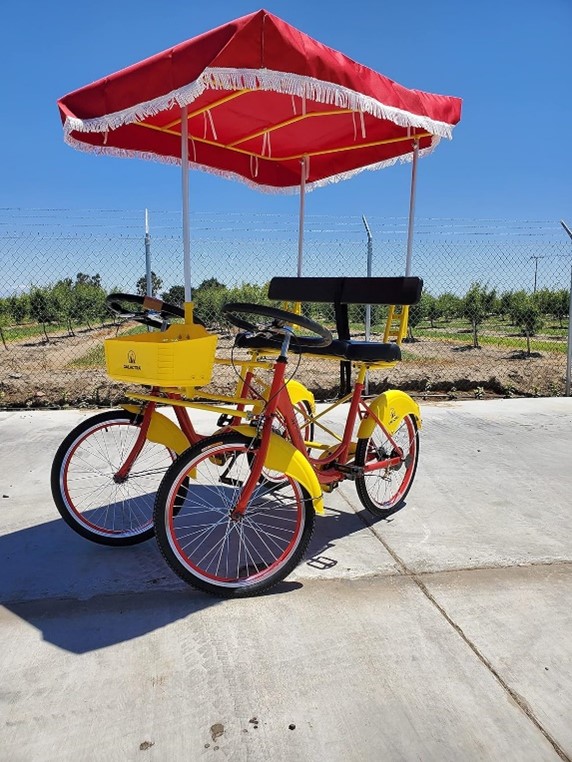
At this point, my experience was limited to my summer job in high school at a bike rental shop and a short stint as a host at Benihana. I knew single surreys (pictured below) on hot weekend days and extra garlic buttery fried rice (also pictured below) made money, but not much else.

I wanted to learn something tangible, something real. What quantitatively makes up a business? “The numbers!” I thought to myself, “Ahh, I’ll major in finance”.
I’m certainly more of a numbers person than a creative (which I’m sure is no surprise as you scroll through this sterile blog) which made finance easier for me than most other subjects.
Who’s Who in the Finance Zoo
Once I decided on finance, I began my search for an internship. It’s scary thinking back to a point where I had no clue what types of jobs were in finance, much less how they ranked in terms of pay, hours, lifestyle, on the job learning, etc.
Over two months, I submitted +50 internship applications. After a flurry of denials, I had five interviews.
The first interview started with a question: “Why do you want to work in capital markets?”, a tough question to answer when you don’t know what “capital markets” means…
By interviews 4 and 5 I hit my stride and received two offers. One in wealth management, and one at an early-stage growth equity firm.
The wealth management internship paid more, but I was told the private equity / growth equity roles were more coveted. I decided to turn down the higher paying job for what should be better experience.
Looking back, it was 100% the right decision, but I remember being so torn about it at the time. “But I could make $5 / hour more at the other one!!!”
A good reminder to trade skills and experience for money when possible.
Fast forward to the first day at the internship. We were sitting at lunch trying to not be awkward in front of our new bosses, and it was time for ice breakers. One of the questions was: “What do you want to do once you graduate?” Honestly, I don’t remember what I said. What I do remember is I had no clue, and everyone else had the same answer: Investment Banking.
From Internship to Full-Time Role
This was the first time I had heard of investment banking. Over the course of my internship, I learned from the other interns and the partners at the firm about IB. Here’s what I think I knew at the time:
- It paid well (checked box 1)
- You worked with companies to help them sell to private equity investors (seemed to check box 2)
- You sacrificed your life for ~2 years as an Analyst but once it was over, you could work “wherever you want”
It sounded as interesting as it did intimidating. There was a formal recruiting process that I was already behind in, plus you were supposed to be networking daily with people in the industry just to have a shot at an interview.
Towards the end of my internship, I started to apply for full-time jobs after graduation. I was attempting to stay on the buyside in some capacity (as an investor vs. a broker / banker), but when IB jobs popped up, I applied.
For some reason, one of the investment banks called me after I applied on LinkedIn. 5 straight days of flashcard studying, 1 superday, and an exciting offer call later, I had a job in investment banking after graduation. It was the only full-time role I interviewed for.
I was lucky to somehow fall ass backwards into investment banking. To know how rare this type of recruiting experience is, go search “wall street oasis recruiting stories” and see how brutal the paths can be.
Unfortunately, I was not a “die-hard” Analyst who had always dreamed of working +80 hours a week in baby blue, white collared dress shirt. Eventually, the job grinded me down.

I learned a ton and am incredibly grateful for the experience. At the same time, I stressed myself out to the point I had a major panic attack during my 1.5-year stint as an Analyst. The worst part was, I was performing really well. It wasn’t like I was being told I sucked or that I needed to work harder. The anxiety was all self inflicted. Looking back, it was a blessing it happened because it forced me to confront an issue that I had for so long, I didn’t know it was an issue.
Taking the Leap
The incident slowly steered me towards searching for the next opportunity.
A former co-worker and friend of mine had recently started a company. It was in a high-growth, volatile industry where the upside was immense, but the downside was real. They had raised the money to execute, and were ready to run.
Much of the career advice I had read and seen up until this point was along the lines of: to accelerate your career and earnings, exchange additional risk for equity. This seemed like the perfect opportunity to do just that.
Looking back, I wish I could have contextualized that “all I had read and seen” was at the tail end of one of the greatest bull runs in history. It was rare the additional risk didn’t cash.
Fast forward a little over a year. It was time to move on from start-up land. I have a laundry list of lessons learned from that experience, but those will be for another post. In short, we failed, but we learned, and damn it, did we try.
Taking a New Approach
Now looking for my 3rd job in 4 years, I wanted to take my time and make a long-term oriented decision.
Perhaps scarred by some of the startup volatility, I was searching for a career in an industry I knew would be around for the rest of my life. I figured the longer I could stay in the job, the more my skills, knowledge, and network could compound. Eventually, if I worked hard and smart enough, I could maybe satisfy my irrational appetite to work hard.
That was another thing. I couldn’t see a world where I was not working. Even if I hit the lottery tomorrow, I’m not sure I’m capable of living on an island and playing on the beach all day… I’d end up talking personal finance with a volleyball (WILSONNNN).

If I was going to work no matter what, I might as well take the longer time horizon approach.
Couple this revelation with a long-standing interest in real estate and private equity: you have a new career path. Real estate investment.
I’ve been working as an Investment Analyst (a bit of a necessary step back to get down the basics) for about 6 months and am enjoying the work. Mostly because I know I’ll use what I’m learning for the rest of my life.
If you’d like to keep up with everything I’m learning, my long-term career goals, and hopefully some personal real estate investments, click the link below and I’ll let you know when I post next:
If you hate periodic emails, please don’t sign up, but feel free to check in every once and while.
Thanks for reading!
 realestateodyssey.com
Leave a comment